

The UAE employment visa process is something that every single person who comes to work in UAE goes through — yet it remains one of the most misunderstood and anxiety-inducing parts of the entire UAE relocation experience. Questions come from everywhere. How long does it take? What documents do I need? What happens at the medical test? When do I get my Emirates ID? What if something goes wrong?
The confusion is understandable. The process involves multiple steps, multiple authorities, and multiple documents — and the information available online is often outdated, inaccurate, or written in a way that creates more questions than it answers.
This guide fixes that. Every step of the UAE employment visa process in 2026 is explained clearly, accurately, and in plain language — so you know exactly what to expect, in what order, and how long each stage typically takes.
Understanding Who Manages the UAE Employment Visa Process
Before we go through the steps, it is important to understand which government authorities are involved in the UAE employment visa process. This helps you know where to go and who to contact if you have questions or face any issues.
Key Authorities in the UAE Employment Visa Process
| Authority | Role in the Visa Process |
|---|---|
| Ministry of Human Resources and Emiratisation (MOHRE) | Issues the work permit (labor card) for private sector employees |
| Federal Authority for Identity, Citizenship, Customs and Port Security (ICP) | Issues the residence visa and Emirates ID |
| GDRFA Dubai | Handles residence visa matters specifically for Dubai residents |
| UAE Ministry of Foreign Affairs (MOFA) | Handles document attestation for foreign documents |
| Approved Medical Fitness Centers | Conduct the mandatory medical fitness test |
| Emirates Post | Delivers the Emirates ID to the registered address or post office |
Understanding these authorities and their specific roles removes a lot of the confusion around who does what in the overall process.
The Complete UAE Employment Visa Process — Step by Step in 2026
The UAE employment visa process generally follows a clear sequence of steps. While the exact timeline and specific requirements can vary slightly depending on your employer, your emirate, and your nationality — the overall process is consistent across the country.
Step 1 — Receiving and Signing Your Job Offer and Employment Contract
The UAE employment visa process begins the moment you receive and accept a formal job offer from a UAE employer. Before signing anything, it is critical that you read and fully understand your employment contract.
What Your UAE Employment Contract Must Include
Under UAE Federal Decree-Law No. 33 of 2021, every employment contract must clearly state:
- Your full name and nationality
- Your job title and description of duties
- Your basic salary and any allowances (housing, transport, etc.)
- Your working hours per day and per week
- Your annual leave entitlement
- Your notice period for resignation or termination
- The contract duration — all UAE employment contracts are now fixed-term, maximum 3 years, renewable
- Your probation period — maximum 6 months under current UAE labor law
- The date of joining and place of work
Red Flags to Watch for in a UAE Employment Contract
- Vague job description — your duties should be clearly defined
- No mention of allowances — if your offer letter mentioned housing or transport allowance, it must appear in the contract
- Excessive probation period — UAE law caps probation at 6 months. Any longer is illegal
- Missing gratuity mention — your end of service entitlement should be acknowledged
- All-inclusive salary with no breakdown — always request a full breakdown of basic salary vs allowances
If anything in your contract seems unclear or incorrect, raise it with your employer before signing. Once signed, the contract becomes a legally binding document.
Step 2 — Your Employer Applies for Your Work Permit (Labor Card)
Once your employment contract is signed, your employer initiates the visa process by applying for your work permit through the Ministry of Human Resources and Emiratisation (MOHRE). This is also sometimes called a labor card or labor approval.
What Happens During the Work Permit Application
- Your employer submits your personal documents and job details to MOHRE through their registered company account
- MOHRE reviews the application and verifies that your employer is registered, compliant, and authorized to hire for your specific role and nationality
- Upon approval, MOHRE issues a work permit approval which allows the next steps to proceed
Documents Your Employer Typically Needs from You at This Stage
- Copy of your passport (all pages)
- Passport-sized photographs with white background
- Copy of your educational certificates (attested if required for your profession)
- Copy of any relevant professional licenses (especially for regulated professions like healthcare, engineering, and law)
This step is handled entirely by your employer or their PRO (Public Relations Officer). Your role at this stage is simply to provide the required documents promptly and accurately.
How Long Does Work Permit Approval Take?
Work permit processing time typically ranges from 3 to 7 working days for straightforward applications. Applications that require additional verification — such as certain regulated professions or nationalities that require pre-approval — may take longer.
Step 3 — Entry Permit (If You Are Outside UAE)
If you are applying for your UAE employment visa from outside the country — which is the case for most first-time visa holders — your employer will apply for an Entry Permit on your behalf after the work permit is approved.
What is a UAE Entry Permit?
The Entry Permit is an electronic visa that allows you to enter UAE for the purpose of completing your residence visa process. It is not the same as your full residence visa — it is a temporary authorization to enter the country.
- The Entry Permit is valid for 60 days from the date of issue
- It is a single entry permit in most cases
- It is issued electronically — your employer or their PRO will receive the confirmation and share it with you
- You do not need a physical visa stamp to travel — the entry permit is registered in the system and linked to your passport number
If You Are Already Inside UAE on a Visit or Tourist Visa
If you are already in UAE on a valid visit or tourist visa when you receive your job offer, the process is slightly different. Instead of an entry permit, your employer will apply for a status change — converting your visit visa status to an employment residence visa status. This allows you to complete the visa process without leaving the country.
However, in some cases, your employer may ask you to exit UAE briefly (often a short trip to a neighboring country) and re-enter on the new entry permit. This is sometimes called a visa run and is a common practice in UAE.
Step 4 — Arriving in UAE and Reporting to Your Employer
Once your entry permit is issued, you can travel to UAE. Upon arrival at any UAE airport, your entry permit is verified electronically at immigration — you do not need to present any physical document other than your passport.
What to Do Immediately After Arriving in UAE
- Contact your employer or PRO to confirm your arrival and get the next steps
- Do not lose any documents — keep your passport and all copies safe at all times
- Confirm your accommodation — your employer may provide accommodation or assist you in finding it
- Avoid making any major financial commitments until your visa is fully processed and your Emirates ID is in hand
Step 5 — The Medical Fitness Test
The medical fitness test is a mandatory requirement for all UAE residence visa applicants. It cannot be skipped or substituted. The test is conducted at government-approved medical fitness centers across UAE.
What the UAE Medical Fitness Test Includes
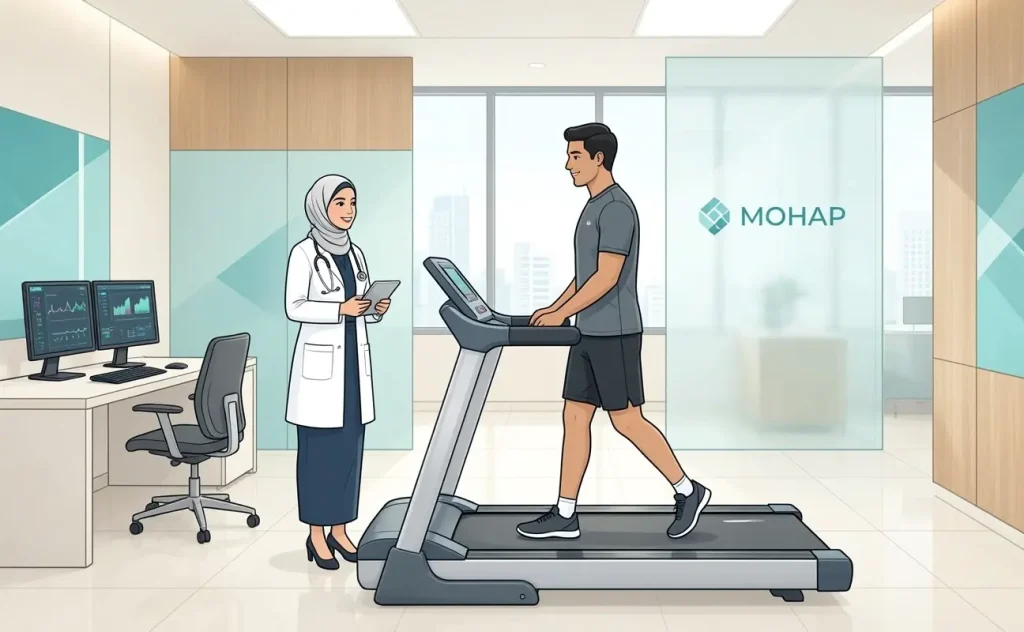
The standard UAE medical fitness test checks for:
- Tuberculosis (TB) — chest X-ray examination
- HIV/AIDS — blood test
- Hepatitis B and C — blood test (required for certain visa categories and professions)
- Leprosy — physical examination
- General physical health assessment
Important Facts About the UAE Medical Fitness Test
- The test must be done at an ICP-approved medical fitness center — results from other facilities are not accepted
- Results are usually available within 1 to 3 working days
- If your test results are clear, the process continues to the next step
- If any communicable disease is detected that is on the UAE restricted list, your visa application may be declined and you may be required to leave the country
- The cost of the medical fitness test varies but is generally between AED 250 to AED 320 depending on the center and tests required
How to Find an Approved Medical Fitness Center Near You
You can find the list of ICP-approved medical fitness centers through the ICP UAE official website or your employer’s PRO will typically direct you to the nearest approved center.
Tips for Your Medical Fitness Test Appointment
- Fast for at least 6 to 8 hours before your blood test component if advised
- Bring your original passport and a passport-sized photograph
- Wear comfortable clothing — you will need to have a chest X-ray done
- Bring any relevant medical records if you have pre-existing conditions — though these do not typically affect the standard fitness test
- Arrive early — medical centers can be busy, especially in the morning
Step 6 — Emirates ID Biometrics Appointment
Once your medical fitness test is cleared, the next step is completing your Emirates ID application by providing your biometric data — fingerprints and a digital photograph.
Where to Complete Your Emirates ID Biometrics
Biometric data collection for Emirates ID is done at:
- ICP service centers across all emirates
- Approved typing centers and Amer Centers in Dubai
- Some Tasheel centers also handle Emirates ID biometrics
Your employer’s PRO will typically schedule this appointment for you or guide you on how to book it yourself through the ICP Smart Services Portal.
What to Bring to Your Emirates ID Biometrics Appointment
- Original passport
- Entry permit copy or visa application reference number
- Medical fitness test clearance confirmation
- Passport-sized photograph (white background)
- Any additional documents your employer’s PRO has advised
The biometric appointment itself is quick — typically 10 to 15 minutes. Your fingerprints are scanned and your photograph is taken digitally.
Step 7 — Residence Visa Stamping in Your Passport
After your biometrics are completed and all documents are verified, your UAE residence visa is stamped into your passport. This is the official confirmation of your legal residency status in UAE.
How Residence Visa Stamping Works in 2026
In many cases, especially in Dubai, the residence visa is now issued as an e-visa — a digital visa linked to your passport number in the ICP system — rather than a physical stamp in your passport. However, some emirates and some visa categories still use a physical stamp.
Your employer’s PRO will advise you on whether you need to submit your passport for physical stamping or whether your visa will be processed digitally.
Key Information About Your UAE Residence Visa
- Your residence visa is typically valid for 2 years or 3 years depending on your employer’s license type and your contract duration
- The visa clearly states your visa type, sponsor, validity dates, and permitted activity
- Your residence visa must be renewed before it expires — your employer’s PRO typically handles this
- Renewal can begin up to 3 months before expiry to avoid any gap in your legal status
What If Your Passport Expires Before Your Visa Does?
Your UAE residence visa is linked to your passport. If your passport expires while your visa is still valid, you need to renew your passport through your home country’s embassy in UAE and then transfer your visa to the new passport. This is a straightforward process but must be done before your passport expires to avoid complications.
Step 8 — Emirates ID Delivery and Collection

After your residence visa is processed and your biometrics are on file, your Emirates ID card is printed and dispatched. This is the final step in the UAE employment visa process.
How Emirates ID Delivery Works in UAE
- Your Emirates ID is delivered through Emirates Post
- You will receive an SMS notification when your ID is ready for collection or out for delivery
- You can also track your Emirates ID status through the ICP Smart Services Portal or the ICP smart app
- If you miss the delivery, you can collect your Emirates ID from the Emirates Post branch specified in your tracking notification
- Emirates ID can also be collected by your employer’s PRO with proper authorization
What to Do As Soon As You Receive Your Emirates ID
- Check all details carefully — name spelling, date of birth, nationality, and expiry date
- If any details are incorrect, report it to ICP immediately for correction
- Make copies — keep physical and digital copies of your Emirates ID in a safe place
- Register for UAE PASS using your Emirates ID — this digital identity platform is used for most government services in UAE
- Open your UAE bank account — most banks require your Emirates ID to open an account
How Long Does the Complete UAE Employment Visa Process Take?
This is the question most people ask first. The honest answer is that it varies — but here is a realistic timeline based on the standard process in 2026.
Realistic UAE Employment Visa Timeline
| Stage | Estimated Time |
|---|---|
| Work permit approval by MOHRE | 3 to 7 working days |
| Entry permit issuance | 2 to 5 working days |
| Medical fitness test and results | 1 to 3 working days |
| Emirates ID biometrics appointment | 1 to 3 working days (scheduling) |
| Residence visa stamping | 3 to 7 working days |
| Emirates ID printing and delivery | 5 to 10 working days |
| Total estimated timeline | 3 to 5 weeks from work permit application |
These are estimates under normal circumstances. Delays can occur due to additional document verification requirements, peak processing periods, or specific nationality and profession requirements. Always follow up regularly with your employer’s PRO if the process extends beyond these timeframes.
Common Problems During the UAE Employment Visa Process and How to Handle Them
Problem #1 — Medical Fitness Test Fails
If your medical fitness test returns results that are flagged under UAE health regulations, your employer will be informed and your visa application will be put on hold or declined. In such cases:
- You have the right to request a re-test at another approved facility if you believe the results are incorrect
- Consult your doctor and the relevant UAE health authority for guidance
- Understand that certain conditions on the UAE restricted list may unfortunately result in visa rejection regardless of re-testing
Problem #2 — Document Issues or Missing Attestation
If your educational certificates or other documents are not properly attested, your work permit application may be delayed or rejected. Always ensure:
- All required documents are attested through the correct channels before you leave your home country
- Work with your employer to confirm exactly which documents need attestation for your specific role
- Contact the UAE MOFA at mofa.gov.ae for attestation guidance
Problem #3 — Employer Delays in Processing
Unfortunately, some employers are slow in processing employee visas — sometimes due to administrative issues, sometimes due to financial problems with their business. If your employer is delaying your visa process without valid explanation:
- Request a written update from your HR department
- Contact MOHRE on 800 60 if you believe your employer is deliberately withholding your visa processing
- Keep records of all communications with your employer regarding your visa status
Problem #4 — Entry Permit Expiry Before Completing the Process
If your entry permit is about to expire and your visa process is not yet complete, contact your employer immediately. In most cases, your employer can apply for an entry permit extension through ICP. Do not let your entry permit expire without taking action — this can complicate your visa process significantly.
UAE Employment Visa Costs — Who Pays What?
What Your Employer Must Pay
Under UAE labor law, the employer is legally responsible for bearing the costs of:
- Work permit application fees
- Entry permit fees
- Residence visa stamping fees
- Emirates ID application fees
- Medical fitness test fees (in most cases)
What You May Be Asked to Pay
In practice, some employers — particularly smaller companies — pass some of these costs to employees. While this is technically against the spirit of UAE labor regulations, it does happen. If you are asked to pay for your own visa processing, get all agreements in writing and be aware that this is not standard practice and can be raised with MOHRE if it becomes a dispute.
Official Resources for UAE Employment Visa Process
- ICP UAE (Visa and Emirates ID) — icp.gov.ae
- MOHRE UAE (Work Permit and Labor Rights) — mohre.gov.ae
- GDRFA Dubai (Dubai Residence Visa) — gdrfad.gov.ae
- UAE MOFA (Document Attestation) — mofa.gov.ae
- UAE Government Portal — u.ae
Frequently Asked Questions — UAE Employment Visa Process
Can I work in UAE while my residence visa is being processed?
Technically, once your work permit (labor card) is approved by MOHRE and you have entered UAE on your entry permit, you can begin working. However, always confirm this with your employer as some companies prefer to wait until the full visa process is complete.
What happens if my UAE employment visa application is rejected?
If your visa application is rejected, your employer will be notified of the reason. Common reasons include medical fitness test results, document issues, or quota restrictions for certain nationalities in certain roles. Your employer can address the specific issue and reapply in many cases.
Can I change my visa type from tourist to employment inside UAE?
Yes. This is called a status change and is done through ICP. Your employer applies for the status change on your behalf. Not all visa types are eligible for in-country status change — your employer’s PRO can advise on your specific situation.
Do I need to leave UAE to get my residence visa stamped?
In many cases, particularly for status changes inside UAE, you do not need to leave the country. However, for first-time entry permits, you must enter UAE from outside. Your employer will advise on whether an exit and re-entry is required in your specific situation.
What is a PRO in UAE and why are they important?
A PRO (Public Relations Officer) is a company representative who handles all government-related documentation and processing on behalf of the employer and employees. They manage the visa process, Emirates ID applications, labor card renewals, and all official paperwork. Building a good relationship with your company’s PRO makes the entire visa process much smoother.
Final Thoughts on the UAE Employment Visa Process
Understanding the UAE employment visa process step by step removes the anxiety and confusion that so many first-time expats experience. The process is well-structured, manageable, and — when your employer is organized and compliant — typically completed within 3 to 5 weeks from start to finish.
Know your rights. Provide your documents promptly and accurately. Follow up regularly with your employer’s PRO. And keep copies of every document at every stage of the process.
Your UAE residence visa is the foundation of your life in this country. Getting it right from the beginning sets you up for everything that follows.
At Wadi Al Sahab Group, we handle the complete recruitment and documentation process for every worker we place — ensuring that your UAE employment journey starts correctly, legally, and smoothly from day one. Learn more about our services here and take the first step toward your UAE career today.
