
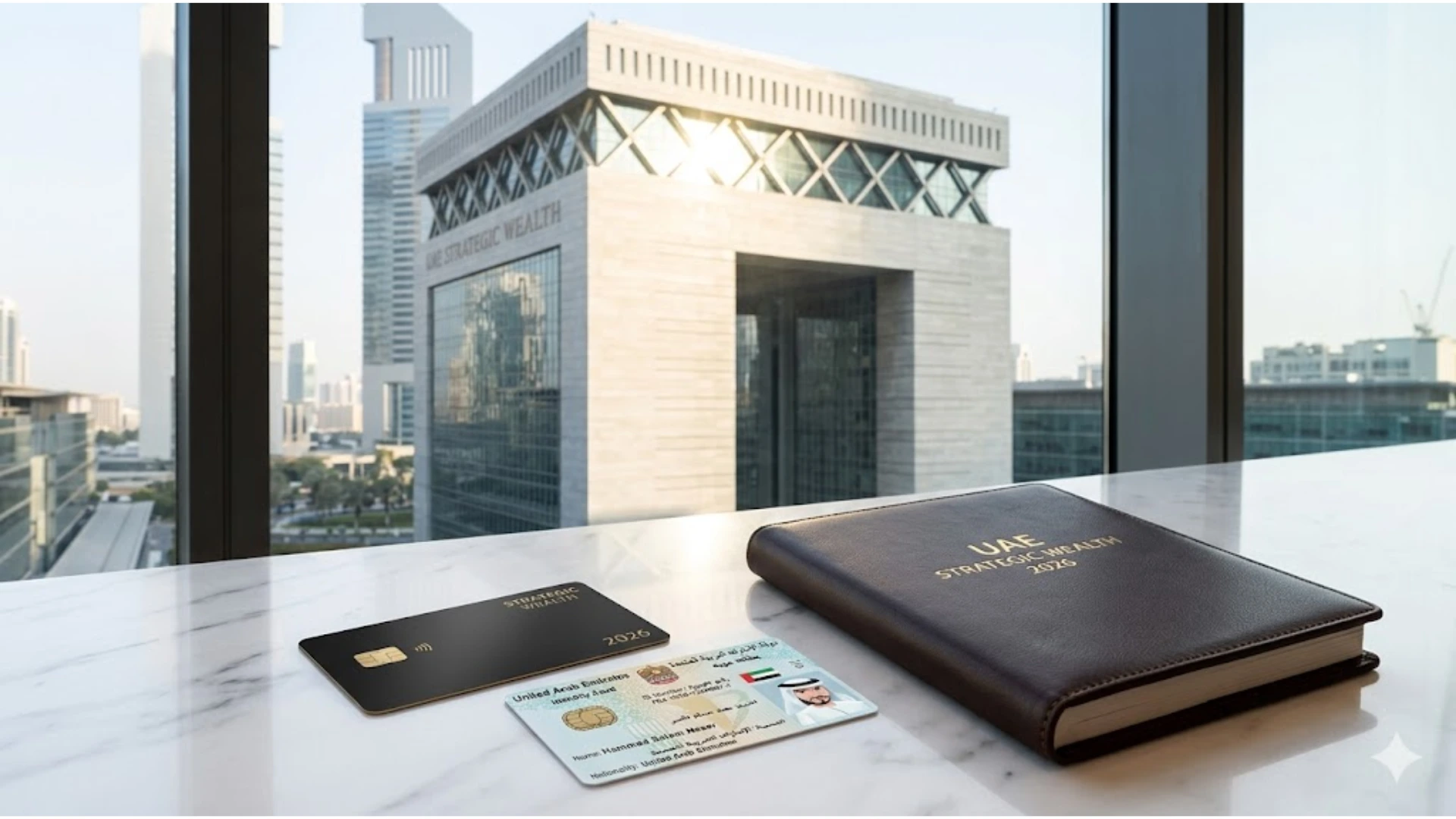
UAE Tax and Finance 2026: A Corporate Briefing for High-Net-Worth Expats
For decades, the United Arab Emirates was marketed as a “fiscal vacuum”—a place where money was earned, kept, and moved without oversight. As we navigate 2026, that vacuum has been replaced by a sophisticated, transparent, and globally aligned financial ecosystem. While the UAE remains one of the most tax-efficient jurisdictions on earth, the introduction of the 9% Corporate Tax and the tightening of Anti-Money Laundering (AML) protocols have changed the rules of the game.
At Al Sahab Wadi Corporate, we believe that financial literacy is the cornerstone of a successful relocation. This briefing details how to manage, protect, and grow your wealth in the “Mature UAE” of 2026.
The Death of “Zero Compliance”: Navigating Corporate Tax: UAE Tax and Finance 2026
2026 is the first year where nearly every business entity in the UAE—from solo freelancers to multinational branches—has completed a full tax cycle.
The 9% Reality and the AED 375,000 Threshold
Corporate Tax is no longer a “future worry.” It is a daily operational reality.
Small Business Relief (SBR) in 2026: UAE Tax and Finance 2026
For many expats Moving to Dubai in 2026 as entrepreneurs, the Small Business Relief remains a lifeline. If your revenue is below AED 3 million, you may elect for 0% tax, but the compliance burden (filing returns and maintaining audited-standard books) is now mandatory.
The Personal Income Tax “Shield”
The most critical takeaway for 2026: Personal Income Tax remains 0%. Your salary, dividends from your own company, and personal investment returns are not subject to the 9% levy. This creates a massive “wealth delta” compared to London, Paris, or New York.
Strategic Wealth Management: Beyond the Savings Account
In the old Dubai, expats kept their money in “dead” savings accounts. In 2026, the rise of the DIFC (Dubai International Financial Centre) and ADGM (Abu Dhabi Global Market) has turned the UAE into a sophisticated investment hub.
The Rise of the “Savings Scheme” (DEWS and Beyond)
As discussed in our labor law briefings, the shift from lump-sum gratuity to managed investment funds (like the DEWS plan) is now the norm.
Managing Your Own Investment Risk
Expats in 2026 are expected to choose their own risk profiles (Sharia-compliant, Low-Risk Capital Protected, or High-Growth Equity). At Al Sahab Wadi Corporate, we advise executives to view this as a primary retirement vehicle, not just a bonus.
Real Estate as a Financial Hedge: UAE Tax and Finance 2026
With the Dubai 2040 Urban Master Plan reaching major milestones in 2026, real estate remains the favorite “hard asset” for expats.
The “Golden Visa” Investment Threshold
Investing AED 2 million in property remains the “Golden Ticket” for long-term residency. However, in 2026, the focus has shifted from “Off-Plan Flipping” to “Yield-Focused Rentals” in secondary hubs like Dubai South.
Banking 2.0: The Digital and Compliance Squeeze
Opening a bank account in 2026 is a “compliance marathon,” not a “walk-in.”
The KYC (Know Your Customer) Reality
Banks in 2026 are under immense pressure from the Central Bank of the UAE to maintain “White List” status with the FATF.
Why Your “Source of Wealth” Matters
If you are transferring significant capital for Moving to Dubai in 2026, expect to provide three years of audited tax returns from your home country. “Cash is King” has been replaced by “Documentation is King.”
The Rise of Digital-Only Corporate Banking
For the modern consultant, traditional banks like ENBD or ADCB are being challenged by digital-first entities like Wio and Zand.
Benefits of 2026 Digital Banking: UAE Tax and Finance 2026
- Instant VAT Accounting: Integrated tools that calculate your 5% VAT liability in real-time.
- Multi-Currency Wallets: Essential for the “Glowmad” professional who earns in USD but spends in AED.
The VAT Trap: Why 5% is More Than You Think
Value Added Tax (VAT) has been part of the UAE since 2018, but in 2026, the Federal Tax Authority (FTA) has deployed AI-driven audits to catch non-compliant individuals.
Mandatory Registration for Freelancers: UAE Tax and Finance 2026
If your annual turnover (not profit) exceeds AED 375,000, you must register for VAT. In 2026, the FTA’s systems are linked to the Ministry of Economy’s license database.
The Penalty for Late Registration: UAE Tax and Finance 2026
The fines for missing your VAT registration window can exceed AED 20,000. For a new expat, this is a “rookie mistake” that can be easily avoided with professional guidance.
Succession Planning and the DIFC Wills
The final, and often most ignored, financial reality of 2026 is what happens to your wealth if you are no longer here.
Sharia Law vs. Common Law Wills
Without a registered will, your assets in the UAE (bank accounts, property, cars) are subject to Sharia inheritance rules.
The DIFC Wills Service Centre
For non-Muslim expats Moving to Dubai in 2026, registering a DIFC Will is the only way to ensure 100% of your assets go to your chosen beneficiaries. In 2026, this process can be done entirely via a virtual “Video Witnessing” portal, making it an essential part of your first 90 days in the country.
Related Posts
- Moving to Dubai in 2026: 7 Realities No One Tells You
- UAE Labor Law 2026: The Definitive Guide to Expat Rights
Is there a “Global Minimum Tax” for expats in 2026?
While the UAE has a 9% Corporate Tax, it generally aligns with the OECD’s Pillar Two (15% for massive multinationals). For the average expat or SME owner, the 9% (after the AED 375,000 threshold) is the only figure you need to worry about.
Can I keep my offshore bank accounts while living in the UAE?
Yes, but you must be aware of the Common Reporting Standard (CRS). The UAE automatically exchanges financial info with over 100 countries. There are no “hidden” accounts in 2026.
Do I pay tax on property I sell in Dubai?
There is 0% Capital Gains Tax on the sale of personal property. You will, however, pay a 4% DLD (Dubai Land Department) transfer fee.
How does the 2026 “Exit Tax” work?
The UAE does not have an exit tax. However, you must ensure all your “Final Settlement” dues are cleared and your VAT deregistration is complete, or you may face “travel bans” due to outstanding government debt.
Should I pay myself a salary or a dividend?
In 2026, a salary is a “deductible expense” for your company (reducing your 9% tax bill), whereas a dividend is paid out of “after-tax” profit. However, the salary must be at “Market Value” (Arms-Length Principle) or the FTA will reject the deduction.
